Entropy Resin Blog

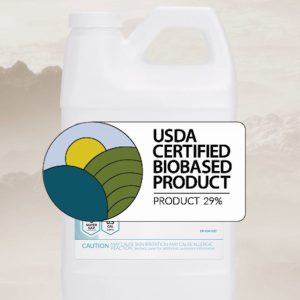
Entropy Resins is pleased to announce that its Super Sap® 100/1000 System has been certified as a USDA (United States Department of Agriculture) certified biobased product.

The USDA Bio-PreferredSM Program is a voluntary labeling program used to certify consumer biobased products in the U.S. The certification uses the ASTM D6866 standard to measure the biobased carbon atoms in a product. "With so many products in the market place being sold as 'biobased', it's difficult today for customers to distinguish between what is real and what is green-washing", states Entropy founder and President, Desi Banatao. "With the ASTM certified 37% bio-based carbon measurement for our Super Sap 100/1000 system, and our calculated total biomass of 50% which includes the biobased oxygen and nitrogen atoms, we are walking the walk and setting the bar for our industry", states Banatao.

From their start in 2009, Entropy Resins has pushed the boundaries of what can be done with biobased materials to create strong, durable, and lightweight performance composites. Today, their customers range from artists and hobbyists, to sporting goods and wind energy manufacturers. Entropy Resins and the USDA BioPreferred Certification Program sets the next standard in verifying biobased content for sustainable performance composite resins.

Starting today thru next week use the coupon code EARTH at checkout and get 10% off your order.

Limited to one use per customer.

January 25, 2011 - FOR IMMEDIATE RELEASE

With its Super SapTM line of bio-derived epoxy systems, Entropy Resins, a California-based materials company, is enabling a new generation of companies to create environmentally friendly yet high performance composite products.

Over the past year, Entropy has partnered with several sporting goods companies to bring their Super SapTM technology to market. One such company, Utah-based Niche Snowboards, uses a proprietary version of Super SapTM across their entire snowboard line. “From the start we wanted to design and build a product where every component had some environmental improvement over the industry standard,” states Dustin Morrell, COO of Niche. “However, snowboards go through an incredible amount of abuse so we had to make sure these components were not only eco-friendly but also performed. Entropy Resins was able to deliver on both goals.”

For 2011, Entropy customers are introducing commercial products across other action sports, including alpine skis, skateboards, and surfboards. However, eco-friendly sporting goods are just the beginning for the materials company. Entropy Resins is expanding into the larger composites markets like wind energy, transportation, and civil engineering. “With new industry standards and government legislation focused on reducing greenhouse gas emissions and maximizing the sustainability of our natural resources, we feel there are further opportunities for our bio-based technology.” states Desi Banatao, lead applications engineer for Entropy. Later this year, Entropy will introduce a line of coatings and adhesive products aimed specifically at the construction industry, as well as resin infusion systems for making large composite parts.

Entropy’s Super SapTM epoxy is based on a patent pending process that replaces petroleum-based chemicals with those sourced from bio-renewable feedstock and waste streams of other industrial processes. “By sharing bio-renewable feed stocks with other industries, like the paper pulp and bio-fuels industries, and using manufacturing processes that require less energy and water we can significantly reduce the carbon footprint of our resins”, states Rey Banatao, Entropy’s lead biochemist. “Considering resins can be more than 50% of the volume in a composite structure, these savings can be environmentally significant.”

Because composites are integral to a product’s structure and integrity, performance has always been a priority for Entropy’s R&D efforts and is the key differentiator for their products. “Historically, bio-derived materials have been used in the resin industry as diluents or plasticizers in adhesives or coatings, which is usually opposite of what you want in a composite.” states Desi Banatao. “However from the beginning our goal has been to employ bio-derived technologies that not only match the performance of existing petroleum-based composites but surpass them in certain areas.” These areas include adhesion and elongation properties that can improve the longevity of composite structure and ultimately the end product.

About Entropy Resins, Inc.

Entropy Resins, Inc. is headquartered in Gardena, CA. For more information about Entropy Resins and their Super SapTM line of sustainable resins, please visit http://www.entropyresins.com or contact Desi Banatao at desi@entropyresins.com.

Paul Schmitt Tony Hawk skateboard seat Roland Sands motorcycle

This custom motorcycle by Roland Sands was built for the 7th annual Tony Hawk: SHRED Presents Stand Up For Skateparks signature benefit in Beverly Hills by "Professor" Paul Schmitt.

The bike assisted in $30,000 to the $750,000 which was raised to further its mission of assisting low-income communities in the effort to build free, quality, public skateparks. Legendary skateboard "Professor" Paul Schmitt built the skateboard seat for this bike using Super Sap 100/1000 Sustainable Epoxy Resin. More pics can be viewed here:
http://rolandsandsdesign.com/wp/2010/10/25/tony-hawk-shred-presents-stan...

See video
ASP Longboard World Champ Duane Desoto and North Shore shaper Kyle Bernhardt

On November 4, 2010, Hawaiian and Makaha native, Duane Desoto took the Oxbow ASP World Championship for the first time.

His equipment was shaped and built by the North Shore's Kyle Bernhardt. You can see Duane taking on Josh Baxter in Round 1 while riding his Super Sap board in the above video. Duane's win was not only a huge step in his career, but also a major statement to the surf industry that eco-friendly boards are performance worthy as well. What's great about Duane is that he's also a true environmentalist at heart. His foundation, Na Kama Kai, empowers youth by creating, conducting and supporting ocean-based programs, specifically targeting ocean awareness & safety in order to increase the capacity of youth in the community through cultural & environmental education.

Congrats to Duane and Kyle!

More info on Duane and Na Kama Kai.
More info on Kyle Bernhardt Shapes.

For the holiday season we are offering free shipping for all orders over $100. So now's the time to buy that epoxy kit for that special person on your shopping list!

Channel Islands Machado Motorboat Surfboard

On our recent visit to the Channel Islands Surfboard Factory and HQ in Carpinteria, CA., we were pleased to see that Channel Islands is taking the first step towards a more sustainable surfboard. Traditionally surfboards have been made using wasteful practices and highly volatile materials such as polyester resin and virgin foams using toxic gases. CI initially is making Rob Machado's Motorboat available in a recycled PU foam and polyester resin. But an even more eco-friendly option may eventually be available in a 100% recycled EPS foam from Marko Foam and Super Sap Epoxy Resin. Help the cause, and order your custom CI board to be made with Marko 100% recycled EPS and our Super Sap Epoxy!

See video

World's largest hemp fiber vacuum bio-resin infusion... a bale of over 15 lb. of raw cannabis sativa fiber were vacuum infused with Super Sap bio-resin.

The strongest natural organic fibers have been combined with the most efficient ratio of sustainable bioresin... derived from waste streams of rapeseed oil (from biofuel industry) along with a biproduct pine resin from paper production. These materials were combined to create a custom display for the 2010 Pointer footwear line. The backlit display is exhibited through November 25th @ Fred Segal, 420 Broadway, Santa Monica.

-Jeff Casper, Casperworks

See video

This video documents/demonstrates the process of "vacuum resin infusion" with Entropy's Super Sap INF system.

It is such an interesting, clean technique for lamination of composites. Initially it was used in the aerospace industry, but more recently has been the method of choice to fabricate large-scale windmill turbine blades as well as giant ultralight boat hulls or other applications requiring a state-of-the-art ratio of reinforcement fiber to resin. There is little waste or noxious odors with this process & the efficiency of the saturation is much higher than hand lamination combined with vacuum bagging.

I recently used this process to create an involute-curved windmill vane for a vertical-axis windmill of my own design. It was a unique achievement & differs from what's been done to date for several reasons. The vanes were built using all natural materials... there is no glass fiber, carbon fiber, kevlar or any other exotic, energy intensive material used... it is a flexible, durable monocoque construction combining a FSC certified plywood sub-frame base with reclaimed/remilled redwood "battens"... this wood core is sandwiched between two layers of hand-dyed 5 oz. hemp/silk cloth. The tinted bioresin used to infuse these components is called SuperSap, a sustainable epoxy created from the waste stream of the paper industry (pine trees) & the biofuel industry (rapeseed). The flywheel/turntable windmill will be mounted in the "crow's nest" of a treehouse I helped build which is located in a mammouth fig tree in Santa Monica, CA.

-Jeff Casper, Casperworks

Feedback from Danny Hess, builder of renowned wooden surfboards that balance sustainability and performance.

"I've really been impressed with the resin. Impressive impact strength and elongation. I've been loaning this demo board out for the last couple years. It's been to Japan and Indo. Not a single pressure ding or ding of any kind."

Hess Surfboards

Read more about Danny's story.

© Entropy Resins Inc | 877-882-2120 (tel)